

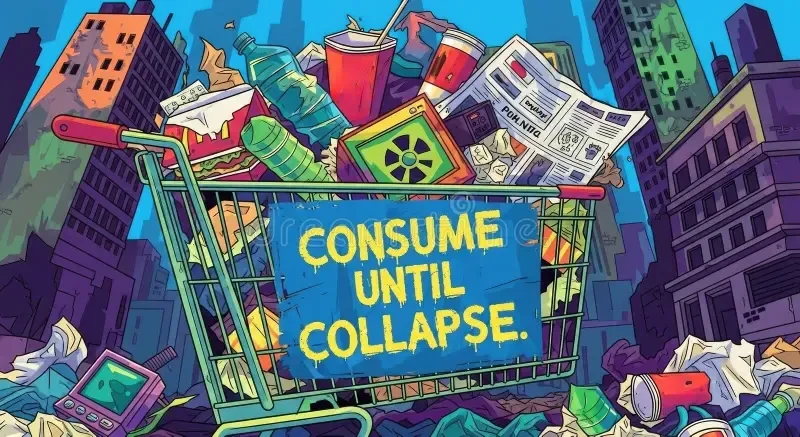
Understanding the Hidden cost of modern consumerism
From waste drowning oceans to overflowing landfills, our daily consumerism shapes the future of this planet. Every single piece of disposable plastic and hyper-cheap trend we consume leaves a permanent, toxic scar on the earth.
Featured research and insights
Discover how everyday consumer choices affect global ecosystems.

Fast Fashion Impact
Brands use synthetic fibers like polyester, nylon and acrylic which take hundreds of years to biodegrade. 35% of all microplastics found in the ocean come from the laundering of synthetic textiles like polyester.

Plastics Usage Danger
Crystallinity of plastic polymers enhances their rigidity by improving structural integrity and resistance to deformation. More specifically, the crystallinity of PE ranges from 60% to 70% justifying its used in the production of food wraps, vehicle fuel tanks, and industrial pipes

Social Media Overconsumption
Consumerism has evolved from fulfilling basic needs to chasing latest trends. This has caused over-extraction of resources and excessive amounts of waste which in turn also caused mass environmental degradation, biodiversity loss, water scarcity, and pollution.
The Cost of Looking Good
Fast fashion companies produce trendy clothes quickly and sell them at affordable prices and social media platforms like TikTok and Instagram encourage people to follow new fashion trends and buy more clothes. Influencers usually affect people’s shopping decisions by promoting variant products & brands. But, producing high inflate of products so quickly creates environmental degradation and many lower wage workers faces hazardous working conditions.

The Cost of Consumerism
Consumerism encourages people to purchase more products and has increased the demand for the natural resources. When companies produce higher rate of products they uses more energy and materials, which causes climate change and creates pollution. This leads to the increase in greenhouse gas emissions through manufacturing and transportation.


Greenwashing
Green advertisement misleads consumers and harms the environment due to how consumerism marketing creates a need and utilizes “green” messaging to hide the fact that pollution is a factor in environmental damage.

Six Sins of Greenwashing
- Sin of Hidden Trade off is a marketing tactic where a product is advertised as sustainable & eco-friendly based on narrow set of feature, while ignoring other major environmental impacts.
- Sin of No proof is a marketing tactic where a company makes an environmental claim that can not be verified through google search or by a reliable third party certification.
- Sin of Vagueness is a marketing practice of making environmental claims that are extensive, far reaching, and poorly defined, or lacking in specifics that they are essentially meaningless or easily misunderstood by consumers.
- Sin of Irrelevance is a marketing tactic where a company makes an environmental claim that is completely true but 100% useless to consumers that are trying to make eco-friendly choices.
- Sin of fibbing is a marketing practice where a company makes an environmental claim that is Utter nonsense and completely false.
-
Sin of Lesser Two Evils is a marketing tactic where a company faithfully claims that their product is more eco friendly than its competitors but in reality all of their products are inherently unsustainable and hazardous to the environment.
Impact of Consumerism
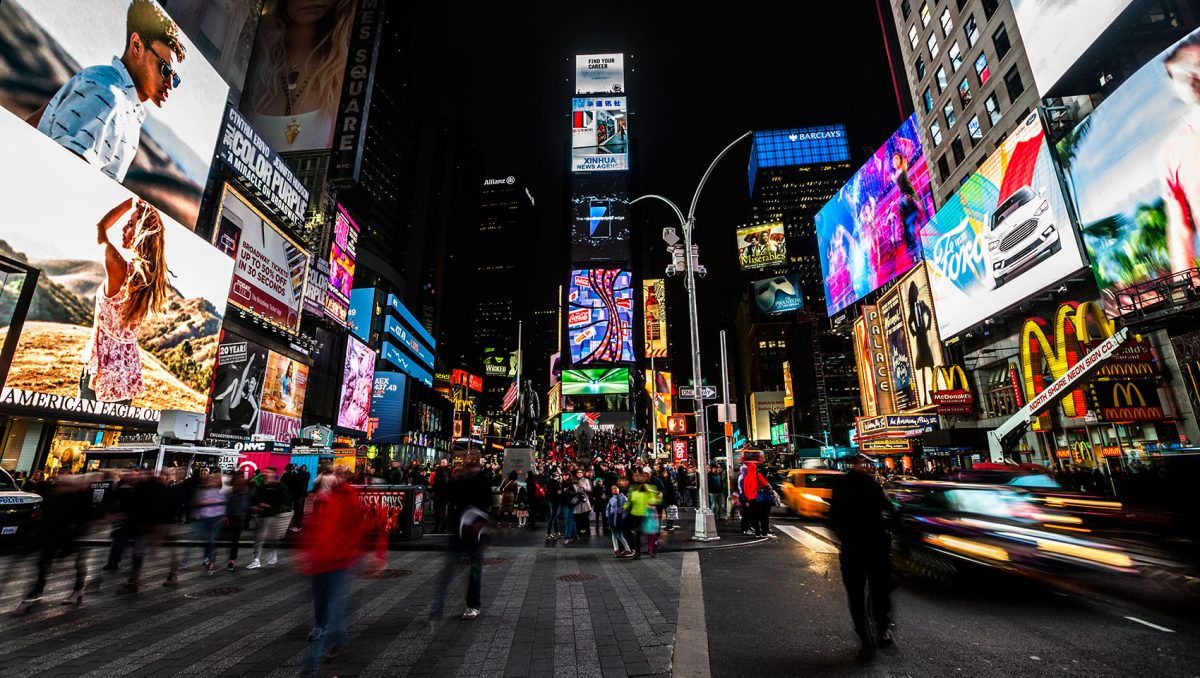
Consumerism is a major part of people's lives and through targeted advertisements and marketing, companies capitalize on the products of various desires. This leads to the excessive shopping, hoarding & throwing away wasted products, creating environmental hazards.

Impact of Overconsumption
Social comparison and fear of missing out, leads to Impulsive spending and excessive shopping through retail therapy. This led to financial stress as people take on debt to sustain lifestyle inflation.

About this Project
This blog was created in purpose of college 1 project to share the danger of unnecessary consumerism: how does our relentless cycle of buying and discarding impact the planet's ecosystems? Through research summaries, real-world examples, this publication sheds light on consumer patterns while highlighting the disastrous change.
Meet our Team
Behind Every Piece of Research Provided is a Dedicated Team of College Students who did their Best to bring Accuracy and Detail.

Kevin
Lead Writer

Anne
staff Writer

Derek
staff Writer

Naomi
staff Writer

Ashly
Staff Writer
SOURCES
- Earth.Org. “Fast Fashion and Its Environmental Impact in 2026 | Earth.Org.” Earth.Org, 3 Feb. 2026, earth.org/fast-fashions-detrimental-effect-on-the-environment.
-
Hassen, Malika Bel, et al. “Plastics Pollution: Pathways, Impacts, and Regulatory Challenges in Marine Environments.” Frontiers in Environmental Science, vol. 13, Aug. 2025, https://doi.org/10.3389/fenvs.2025.1635230.
-
Frick, Vivian, et al. “Do Online Environments Promote Sufficiency or Overconsumption? Online Advertisement and Social Media Effects on Clothing, Digital Devices, and Air Travel Consumption.” Journal of Consumer Behaviour, vol. 20, no. 2, Mar. 2021, pp. 288–308. EBSCOhost, https://doi.org/10.1002/cb.1855.
-
Denton, Allison. “The Cost of Looking Good: How Fashion and Trend-Based Consumerism Impact the Economy, Law, and Environment.” Indiana Journal of Global Legal Studies, vol. 30, no. 2, July 2023, pp. 363–89. EBSCOhost, research.ebsco.com/plink/4f7ca3c9-7fbd-3f75-82b5-ebfb796ebfc2.
-
Jones, Ellis. “Rethinking Greenwashing: Corporate Discourse, Unethical Practice, and the Unmet Potential of Ethical Consumerism.” Sociological Perspectives, vol. 62, no. 5, 2019, pp. 728–54. JSTOR, https://www.jstor.org/stable/26967952. Accessed 6 Nov. 2026.
-
TerraChoice Environmental Marketing Inc. The “Six Sins of GreenwashingTM” a Study of Environmental Claims in North American Consumer Markets. 2007, sustainability.usask.ca/documents/Six_Sins_of_Greenwashing_nov2007.pdf.
-
Meneley, Anne. “Consumerism.” Annual Review of Anthropology, vol. 47, 2018, pp. 117–32. JSTOR, https://www.jstor.org/stable/48550897. Accessed 6 Nov. 2026.
-
Anderson, Kara. “Why Overconsumption Is a Problem and How to Stop It.” Greenly, 18 Feb. 2025, greenly.earth/en-gb/blog/ecology-news/why-overconsumption-is-a-problem-and-how-to-stop-it.
-
Grier, Cynthia Louise. “What is the Environmental Impact of Consumerism?” Ecologic Life, 9 February 2026, https://ecologiclife.com/what-is-the-environmental-impact-of-consumerism.html